
East San Jose Vietnamese Mural Sparks Debate Over Representation and Cultural Ownership Tranh tường ở East San Jose gây tranh luận về quyền đại diện và việc “kể câu chuyện Việt Nam”
__ENGLISH
Author: Thanh Quy
A public mural unveiled in East San Jose in late 2024—celebrated by city officials as one of the largest Vietnamese-themed murals in the Bay Area—has since become the center of a heated discussion about representation, cultural authorship, and the role of community voices in public art.
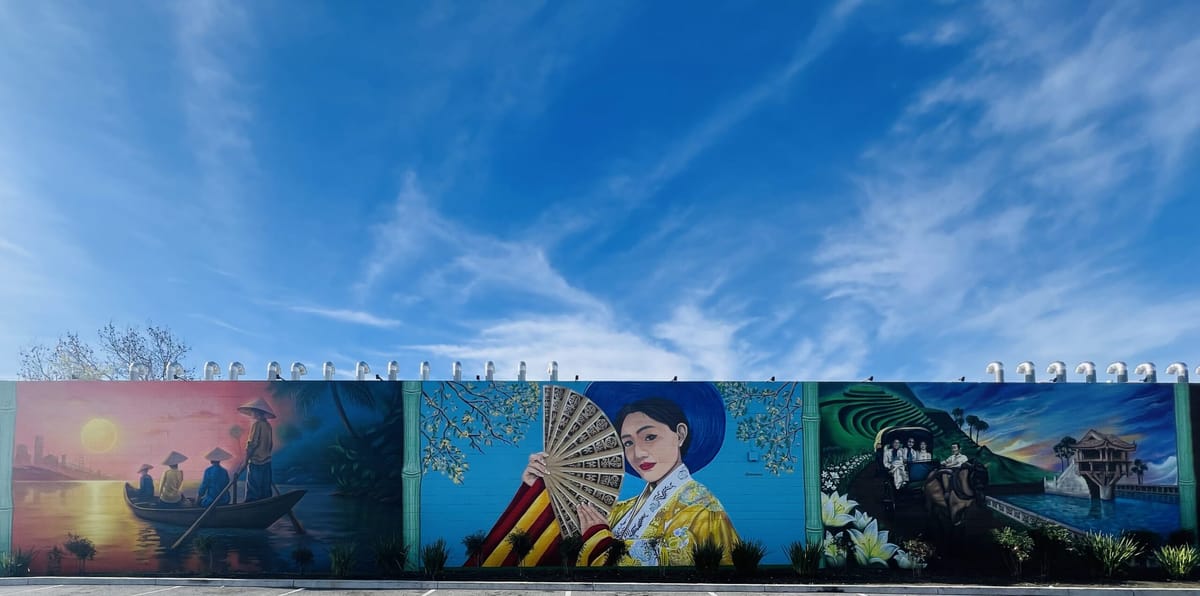
The mural, produced in collaboration with Councilmember Peter Ortiz's office and 1Culture Gallery, features three large panels depicting Vietnamese refugees at sea, a woman in traditional áo dài, and iconic cultural imagery. The project was promoted as a tribute to Vietnamese Americans whose journey shaped the fabric of East San Jose.
Praise from city leaders
At the unveiling, local officials described the artwork as a gesture of visibility and affirmation.
Councilmember Ortiz told San José Spotlight that the mural “honors the Vietnamese community and its contributions to East San Jose,” adding that such projects help younger generations connect with their heritage.
For many residents, especially elders who lived through the refugee era, the mural was “a beautiful reminder of where we came from,” according to one speaker at the event.
Yet behind the celebration, a separate conversation was unfolding.
Criticism from within the Vietnamese art community
Several Vietnamese American artists and cultural workers say the project missed its mark—not because of the images painted, but because of how the mural was created.
A Vietnamese American artist who publicly shared her experience wrote that although the artists themselves “are extremely talented,” the process lacked transparency and meaningful Vietnamese involvement. She said she was initially approached to join the project alongside non-Vietnamese artists but became concerned that Vietnamese voices would be outnumbered.
“I expressed concerns about being outnumbered and that they should consider more Viet artists,” she wrote in a public post. “The curator ghosted me and went on to produce the mural anyway.”
She also raised questions about why no Vietnamese stakeholders were identified and stated that when she asked the curator which Vietnam flag should appear on the mural, “he did not know.”
Another community member, Bảo Thiên Ngô, responded:
“As someone born and raised in San Jose, the depictions here are what I consider stereotypes. They don’t depict real local stories.”
He pointed out that iconic imagery like the One-Pillar Pagoda or a woman paddling a canoe in nón lá are not part of the lived Vietnamese American experience in San Jose, calling the mural a missed opportunity:
“If it were me, I’d pick imagery that represents the fact the Áo Dài Festival started here, or the food truck workers who helped shape Lee’s Sandwiches, or the martial arts masters in our community. These are our real stories.”
Other commenters echoed concerns, arguing that the project—although well-intentioned—perpetuates invisibility by allowing non-Vietnamese artists to define Vietnamese identity in public spaces.
Appreciation or appropriation? A broader question
The controversy raises a recurring issue in cultural art projects:
When does honoring a community become speaking on behalf of it?
Artists and advocates note that public art meant to “celebrate culture” must also involve the community that culture belongs to. Without that, projects risk becoming symbolic rather than substantive.
One Vietnamese American resident wrote:
“While these projects claim to advocate for us, I don’t see how it produces equity for us. Who actually benefits?”
Such concerns are not unique to San Jose. Across the U.S. and Canada, community murals featuring minority cultures have faced similar criticism when led by artists without lived experience of the culture they portray.
A push for Vietnamese-led mural projects
In response to the debate, several Vietnamese artists in San Jose say they are considering organizing their own community-driven mural project—fully conceptualized and executed by Vietnamese Americans.
“We have been talking with artists who all feel disappointed. It would be great to have the support of District 5 to remedy this,” the original artist wrote.
Whether the new mural moves forward remains to be seen, but the discussion has already reshaped how many in the community view public art and cultural storytelling.
As one commenter summarized:
“It matters who tells the stories.”
Sources
- San José Spotlight: East San Jose mural honors Vietnamese community
https://sanjosespotlight.com/east-san-jose-mural-honors-vietnamese-community - Public community posts and comment threads (screenshots provided by user)
- Community feedback form:
https://docs.google.com/forms/d/e/1FAIpQLSek9nRt6wZyzsE9Bo6cYl6M2epT-i87YBc4Squ3b10w12tuRA/viewform
__VIETNAMESE
Tác giả: Thanh Quý
Một bức tranh tường mới ở East San Jose—được ca ngợi là một trong những mural chủ đề Việt Nam lớn nhất vùng Bay Area—đã trở thành tâm điểm tranh luận về quyền đại diện văn hoá, quy trình thực hiện, và ai có quyền kể câu chuyện của cộng đồng người Việt.
Bức mural gồm ba mảng lớn: thuyền vượt biển tìm tự do, phụ nữ trong áo dài, và những hình ảnh văn hoá truyền thống. Dự án được quảng bá như một lời tri ân đến cộng đồng người Việt đã định cư và đóng góp cho East San Jose hơn 40 năm qua.
Lời ca ngợi từ giới chức thành phố
Trong buổi khánh thành, các dân cử và tổ chức cộng đồng cho biết bức tranh là cách để người Việt “được nhìn thấy và ghi nhận.”
Theo lời Councilmember Peter Ortiz trên San José Spotlight, mural này “vinh danh cộng đồng người Việt và những đóng góp của họ cho East San Jose.”
Nhiều bậc cao niên cũng cho biết họ cảm thấy xúc động vì hình ảnh nhắc nhớ hành trình vượt biển đầy đau thương nhưng quả cảm của thế hệ đầu tiên.
Tuy nhiên, các buổi thảo luận trên mạng xã hội lại hé lộ một câu chuyện khác.
Tranh luận từ chính cộng đồng nghệ sĩ người Việt
Một số nghệ sĩ và nhà hoạt động văn hoá người Việt cho rằng vấn đề lớn nhất không nằm ở nội dung của mural, mà ở quy trình thiếu minh bạch và thiếu sự tham gia thực chất của người Việt.
Một nữ nghệ sĩ người Việt được curator liên hệ từ ban đầu viết:
“Tôi đã góp ý rằng nên mời thêm nghệ sĩ Việt để tiếng nói của chúng ta không bị lấn át, nhưng sau đó curator ngừng phản hồi và cứ thế tiến hành dự án.”
Chị cho biết khi hỏi curator nên dùng lá cờ Việt Nam nào, ông “không biết.” Đây là chi tiết khiến nhiều người Việt cảm thấy dự án thiếu sự hiểu biết căn bản về cộng đồng mà nó muốn “vinh danh”.
Một cư dân tên Bảo Thiên Ngô viết trong phần bình luận:
“Những hình ảnh này là khuôn mẫu chung về người Việt, chứ không phản ánh đời sống thật sự của người Việt ở San Jose. Đây là cơ hội bị bỏ lỡ để kể câu chuyện của chính cộng đồng chúng ta.”
Anh đề xuất những hình ảnh mang tính “San Jose đặc thù” như:
- Lịch sử Lễ hội Áo Dài San Jose,
- Những gia đình Việt làm xe thực phẩm, góp phần tạo nên thương hiệu Lee’s Sandwiches,
- Các võ sư Vovinam ở địa phương,
- Những kỹ thuật viên gốc Việt trong ngành bán dẫn.
Nhiều người cho rằng khi người ngoài cộng đồng kể câu chuyện Việt Nam, ngay cả với thiện chí, thì nguy cơ “rơi vào khuôn mẫu” là rất lớn.
Ranh giới giữa trân trọng và chiếm dụng văn hoá
Tranh luận xoay quanh câu hỏi lớn:
Một bức tranh tường nhằm tôn vinh cộng đồng có thực sự đại diện cho họ nếu họ không được tham gia vào quá trình quyết định?
Một nhà hoạt động viết:
“Những dự án này nói là vì chúng tôi, nhưng lợi ích thực tế cho cộng đồng ở đâu?”
Đối với nhiều người, vấn đề không phải người nghệ sĩ là ai, mà là cơ hội để người Việt tự kể câu chuyện của chính mình đã bị bỏ qua.
Ý tưởng về một mural do người Việt dẫn dắt
Sau những tranh luận, một số nghệ sĩ Việt Nam ở San Jose cho biết họ đang trao đổi để thực hiện một dự án mural mới—do người Việt lên ý tưởng, thiết kế, và vẽ, nhằm phản ánh chân thật đời sống và hành trình của người Việt tại San Jose.
“Chúng tôi đã nói chuyện với nhiều nghệ sĩ, ai cũng thất vọng. Nếu được D5 hỗ trợ, cộng đồng có thể tự đứng ra kể câu chuyện của mình.”
Tranh cãi vẫn còn tiếp diễn, nhưng một điều đã trở nên rõ ràng:
Văn hoá không chỉ là hình ảnh; đó là tiếng nói. Và tiếng nói ấy phải đến từ chính cộng đồng.
Nguồn:
- San José Spotlight: East San Jose mural honors Vietnamese community
https://sanjosespotlight.com/east-san-jose-mural-honors-vietnamese-community - Public community posts and comment threads (screenshots provided by user)
- Community feedback form:
https://docs.google.com/forms/d/e/1FAIpQLSek9nRt6wZyzsE9Bo6cYl6M2epT-i87YBc4Squ3b10w12tuRA/viewform