

Nipah Virus Reappears in International Health Reports: What It Is and What the Public Should Know Virus Nipah Tái Xuất: Những Thông Tin Cộng Đồng Cần Biết
__ENGLISH
A rare but potentially deadly virus known as Nipah virus has once again drawn international attention following newly confirmed cases reported in southern India. While health officials emphasize that the situation is being closely monitored and remains localized, the development has raised questions among communities worldwide about the nature of the virus and its potential risk.
Nipah virus, often referred to as NiV, is a zoonotic disease, meaning it can be transmitted from animals to humans. The virus was first identified in 1999 during an outbreak in Malaysia linked to pig farming. Since then, sporadic outbreaks have occurred in parts of South and Southeast Asia, typically involving small numbers of cases rather than widespread transmission.
The most recent cases have been identified in the Indian state of Kerala, where local health authorities have confirmed infections and implemented strict containment measures. According to officials, infected individuals have been isolated, close contacts are being monitored, and hospitals have increased infection-control procedures. Authorities have stressed that the outbreak is limited in scope and that there is currently no indication of community-wide spread. No cases have been reported outside India, and there are no confirmed cases in the United States.
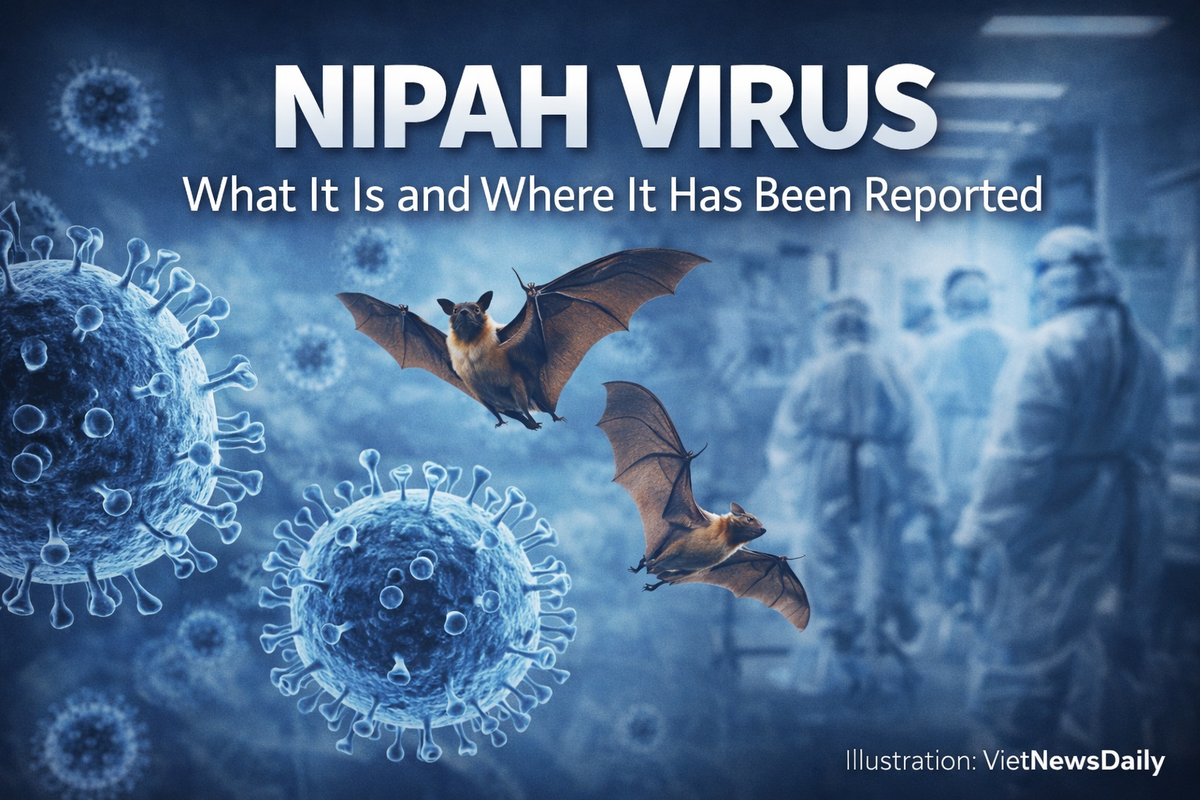
Nipah virus is carried naturally by fruit bats, which can transmit the virus to humans either directly or through contaminated food. In some past outbreaks, domestic animals such as pigs acted as intermediate hosts. Human-to-human transmission is possible but typically requires close and prolonged contact, such as caregiving or exposure in healthcare settings without proper protective measures. Public health experts note that Nipah virus does not spread easily and is not airborne, distinguishing it from viruses such as COVID-19 or influenza.
Symptoms of Nipah virus infection can vary widely. Some individuals may experience mild flu-like illness, while others develop severe respiratory problems or inflammation of the brain, a condition known as encephalitis. Early signs often include fever, headache, muscle pain, vomiting, and sore throat. In more serious cases, patients may become confused, experience difficulty breathing, or fall into a coma. Because of the potential for rapid deterioration, early medical attention is critical.
At present, there is no approved vaccine or specific antiviral treatment for Nipah virus. Medical care focuses on supportive treatment, including managing symptoms and providing intensive care when necessary. Health experts emphasize that prompt isolation of cases and careful monitoring of contacts are highly effective in preventing further spread.
International health agencies, including the World Health Organization, classify Nipah virus as a priority pathogen due to its severity and lack of targeted treatment. However, officials stress that this designation reflects preparedness and vigilance rather than an indication of an imminent global threat. Monitoring systems are in place worldwide to detect and respond quickly to any new cases.
For the general public, including Vietnamese and Asian communities in the United States, health authorities say the risk remains very low. There are no travel restrictions for most people, and routine precautions such as avoiding contact with sick individuals and practicing safe food handling are considered sufficient. Officials also urge the public to rely on verified information from health authorities rather than rumors circulating on social media.
As global travel and communication continue to increase, isolated outbreaks of rare diseases can quickly become international news. Health experts emphasize that awareness, not alarm, is the appropriate response. Viet News Daily will continue to follow developments and provide accurate, timely updates as more information becomes available.
Sources:
- World Health Organization (WHO)
Official disease facts, outbreak monitoring
https://www.who.int/news-room/fact-sheets/detail/nipah-virus - U.S. Centers for Disease Control and Prevention (CDC)
Clear explanations, U.S. risk context
https://www.cdc.gov/vhf/nipah/index.html
__VIETNAMESE
Gần đây, giới y tế quốc tế đã ghi nhận sự xuất hiện trở lại của virus Nipah, một loại virus hiếm nhưng có mức độ nguy hiểm cao, sau khi một số ca nhiễm mới được xác nhận tại miền nam Ấn Độ. Mặc dù tình hình hiện nay vẫn đang được kiểm soát chặt chẽ và chưa có dấu hiệu lan rộng, thông tin này đã khiến nhiều người trong cộng đồng quan tâm và tìm hiểu thêm về loại virus này.
Virus Nipah, thường được gọi tắt là NiV, là một bệnh truyền nhiễm có nguồn gốc từ động vật. Virus này được phát hiện lần đầu vào năm 1999 trong một đợt bùng phát tại Malaysia, chủ yếu ảnh hưởng đến những người làm việc trong ngành chăn nuôi. Từ đó đến nay, Nipah chỉ xuất hiện rải rác tại một số quốc gia ở Nam và Đông Nam Á, với số ca nhiễm tương đối hạn chế và chưa từng gây ra đại dịch toàn cầu.
Theo các báo cáo gần đây, các ca nhiễm mới được xác nhận tại bang Kerala thuộc Ấn Độ. Giới chức y tế địa phương đã nhanh chóng triển khai các biện pháp phòng ngừa, bao gồm cách ly người nhiễm bệnh, theo dõi những trường hợp tiếp xúc gần và tăng cường kiểm soát tại các cơ sở y tế. Các chuyên gia cho biết ổ dịch hiện nay vẫn mang tính cục bộ và chưa ghi nhận sự lây lan trong cộng đồng. Hiện tại, chưa có trường hợp nhiễm virus Nipah nào được ghi nhận tại Hoa Kỳ.
Virus Nipah có vật chủ tự nhiên là loài dơi ăn trái. Con người có thể bị nhiễm virus khi tiếp xúc trực tiếp với động vật mang mầm bệnh hoặc sử dụng thực phẩm bị nhiễm virus. Trong một số trường hợp hiếm, virus cũng có thể lây từ người sang người, tuy nhiên việc lây truyền này thường chỉ xảy ra khi tiếp xúc gần và kéo dài, chẳng hạn như trong quá trình chăm sóc bệnh nhân. Các chuyên gia y tế nhấn mạnh rằng virus Nipah không lây lan dễ dàng và không truyền qua không khí, do đó mức độ lây lan thấp hơn nhiều so với các bệnh truyền nhiễm như COVID-19 hoặc cúm.
Biểu hiện của bệnh do virus Nipah gây ra có thể khác nhau tùy từng trường hợp. Một số người chỉ có triệu chứng nhẹ như sốt, đau đầu, đau nhức cơ thể hoặc buồn nôn. Tuy nhiên, ở những trường hợp nghiêm trọng, bệnh có thể ảnh hưởng đến hệ hô hấp hoặc gây viêm não, dẫn đến rối loạn ý thức, co giật hoặc hôn mê. Việc phát hiện sớm và điều trị kịp thời đóng vai trò quan trọng trong việc giảm thiểu nguy cơ biến chứng.
Hiện nay, chưa có vaccine hay thuốc điều trị đặc hiệu dành cho virus Nipah. Việc điều trị chủ yếu dựa vào chăm sóc y tế hỗ trợ và theo dõi sát tình trạng bệnh nhân. Theo các chuyên gia, những biện pháp như cách ly sớm, kiểm soát nhiễm khuẩn và theo dõi các trường hợp tiếp xúc gần vẫn là phương thức hiệu quả nhất để ngăn chặn sự lây lan của virus.
Tổ chức Y tế Thế giới xếp virus Nipah vào nhóm các mầm bệnh cần được theo dõi do khả năng gây bệnh nặng và tỷ lệ tử vong cao trong một số đợt bùng phát trước đây. Tuy nhiên, giới chuyên môn nhấn mạnh rằng việc theo dõi này mang tính phòng ngừa và chuẩn bị, không đồng nghĩa với việc virus đang gây ra mối đe dọa tức thời trên phạm vi toàn cầu.
Đối với cộng đồng người Việt sinh sống tại Hoa Kỳ và các quốc gia khác, các chuyên gia y tế cho biết nguy cơ hiện nay được đánh giá là rất thấp. Không có khuyến cáo hạn chế đi lại đối với công chúng, và việc duy trì các biện pháp phòng ngừa thông thường, cũng như theo dõi thông tin từ các nguồn đáng tin cậy, được xem là đủ để bảo vệ sức khỏe.
Trong bối cảnh thông tin lan truyền nhanh chóng trên mạng xã hội, các chuyên gia khuyến cáo người dân nên giữ bình tĩnh, tránh hoang mang và không chia sẻ những thông tin chưa được kiểm chứng. Viet News Daily sẽ tiếp tục cập nhật và cung cấp thông tin chính xác đến cộng đồng khi có diễn biến mới liên quan đến virus Nipah.
Nguồn:
- World Health Organization (WHO)
Official disease facts, outbreak monitoring
https://www.who.int/news-room/fact-sheets/detail/nipah-virus - U.S. Centers for Disease Control and Prevention (CDC)
Clear explanations, U.S. risk context
https://www.cdc.gov/vhf/nipah/index.html