
Little Saigon San Jose: Historical Truth or Political Theater During Election Season?

In recent weeks, the Vietnamese community in San Jose has been drawn into an increasingly heated controversy surrounding the banners displayed along Story Road in Little Saigon San Jose. Some supporters of Van Le have been promoting the narrative that Councilmember Bien Doan was responsible for “removing” or “altering” the banners featuring the three red stripes on a yellow background that were associated with the Little Saigon movement of 2008. These accusations have been repeated across social media, seemingly intended to stir emotions and generate outrage within the community during an election season.
However, a closer examination of the history of the Little Saigon San Jose Foundation, along with the City of San Jose’s official policies governing public street banners, reveals a reality that is very different from the version of events being promoted by some individuals.
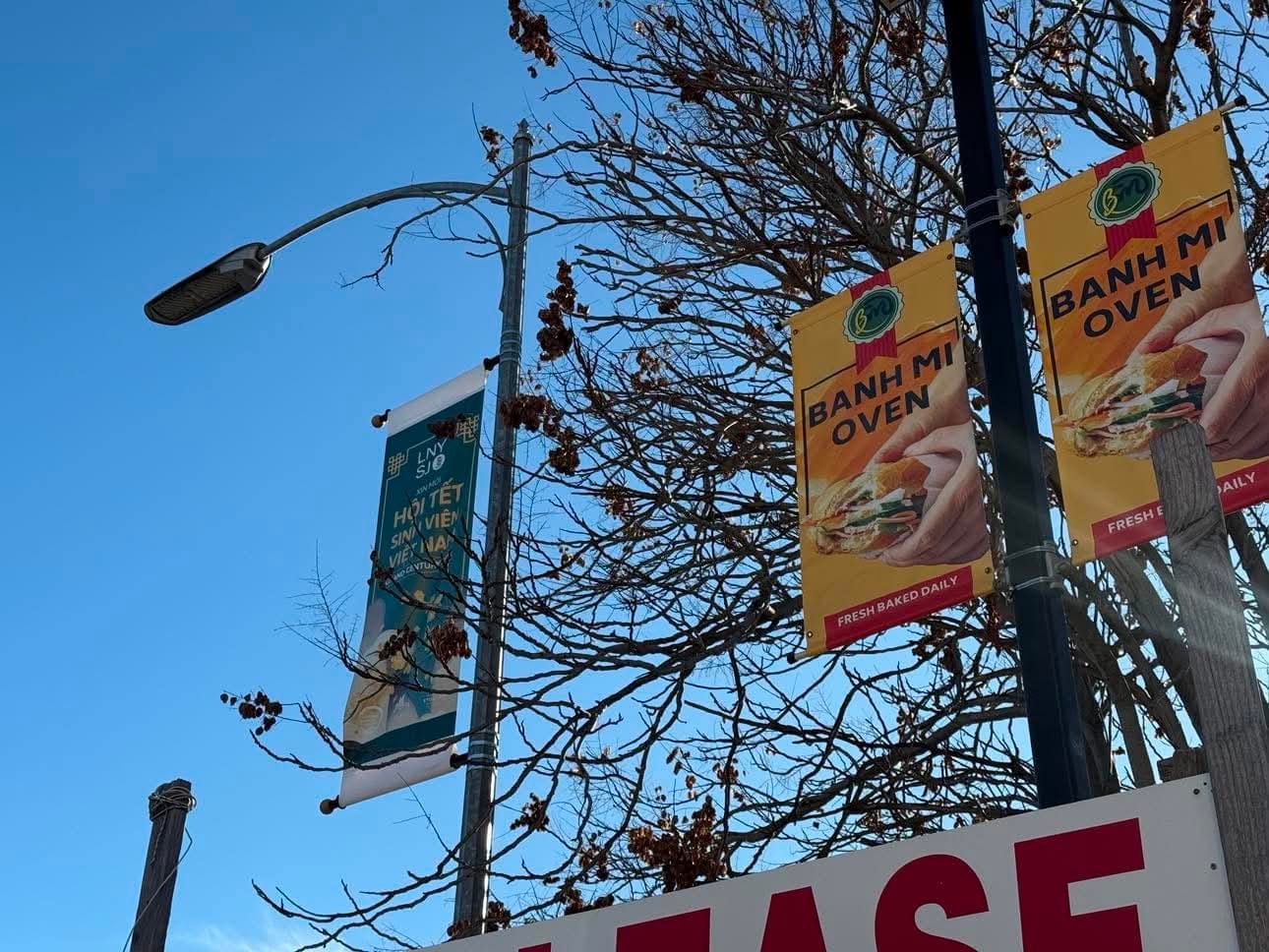
The banners displayed by the Vietnamese American Roundtable and the Vietnamese Student Association of Northern California during the 2025 Lunar New Year celebrations along Story Road provide an example of how various organizations have utilized the city’s banner program over the years.
The Origins of Little Saigon San Jose Foundation
Around 2007 and 2008, as the Vietnamese community fought to secure the designation of “Little Saigon” for the stretch of Story Road between McLaughlin Avenue and Keyes Street, the Little Saigon San Jose Foundation was established as a community advocacy group to support that campaign.
According to statements made by Do Hung, a former president of the organization, the foundation was originally intended as a temporary vehicle for the naming effort rather than a long-term professional nonprofit organization.
Notably, at that time the foundation was not recognized as a federal tax-exempt nonprofit under Section 501(c)(3). It was registered only at the State of California level. Nevertheless, it raised substantial donations from the community to fund projects related to Little Saigon, including the “Welcome to Little Saigon” monument located in the median along Story Road and the decorative banners installed on streetlight poles throughout the corridor.
Unanswered Questions About Governance and Accountability
To this day, several questions remain unanswered:
How were the donated funds managed? Were taxes properly filed? Where are the accounting records? Who currently controls any remaining assets or funds?
These concerns were not raised by outside critics. They were explicitly addressed by former District 7 Councilmember Tam Nguyen in an August 3, 2016 email responding to claims by Do Hung that he had transferred responsibility for the Little Saigon Foundation to Tam Nguyen.
In that email, Tam Nguyen stated that he had never received any official transfer documents from Do Hung. He explained that he had only heard about the alleged transfer through third parties. In fact, the email purportedly documenting the transfer had been sent to 27 recipients, yet Tam Nguyen, the supposed recipient of the transfer, was not among them.
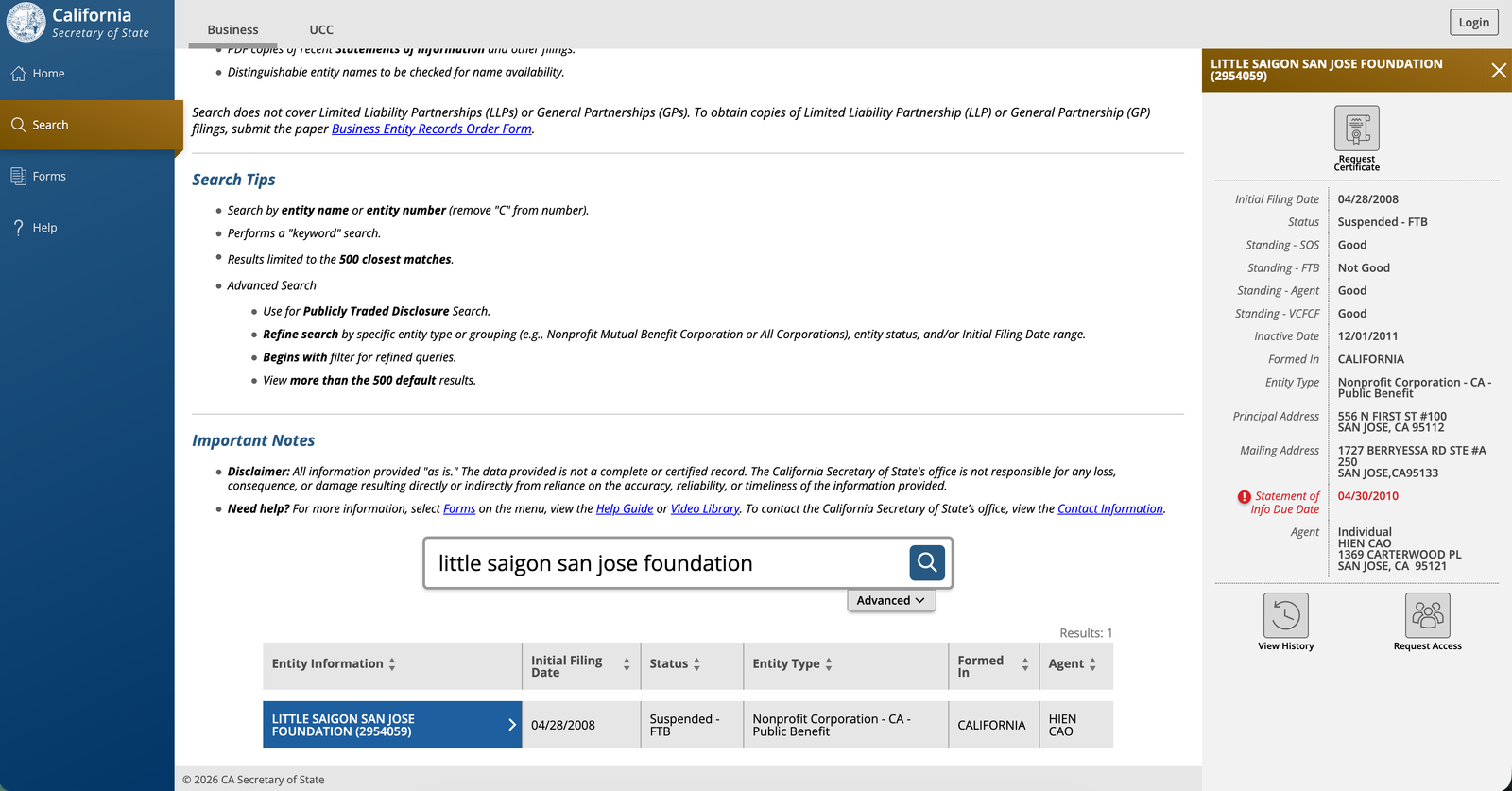
More significantly, Tam Nguyen noted that the foundation’s corporate status had already been suspended by the State of California. According to him, once an organization loses its legal standing, it no longer has the authority to conduct transactions or transfer responsibilities. He further emphasized that corporate actions require proper legal procedures and formal resolutions, not merely informal email exchanges.
A state record screenshot later showed that the Little Saigon San Jose Foundation had been suspended as of December 1, 2011.
Ownership of the Banners
Tam Nguyen also stated that neither he nor the District 7 Council Office had the legal authority to accept ownership of any Little Saigon Foundation assets. He argued that it was improper to blur the distinction between an individual councilmember, a council office, and the City of San Jose itself.
Years later, in an email dated May 11, 2026, Do Hung described a different version of events. He stated that he had met with Councilmember Bien Doan and requested that assets such as the monument and banners be transferred to city ownership so that the city would assume responsibility for maintenance and upkeep. He further stated that Bien Doan had not pursued this transfer, leading to his disappointment and subsequent support for Van Le.
Ironically, that statement appears to confirm a crucial fact: the Little Saigon monument and banners were never owned by the City of San Jose in the first place.
If the city never owned these assets, then the question naturally arises: why should a councilmember be held responsible for the city’s failure to maintain or replace property that did not belong to the city?
What the City’s Banner Program Actually Requires
Under San Jose’s official public banner program, the organization that applies for banner placement is responsible for the entire process, including funding, design, production, installation, maintenance, and replacement.
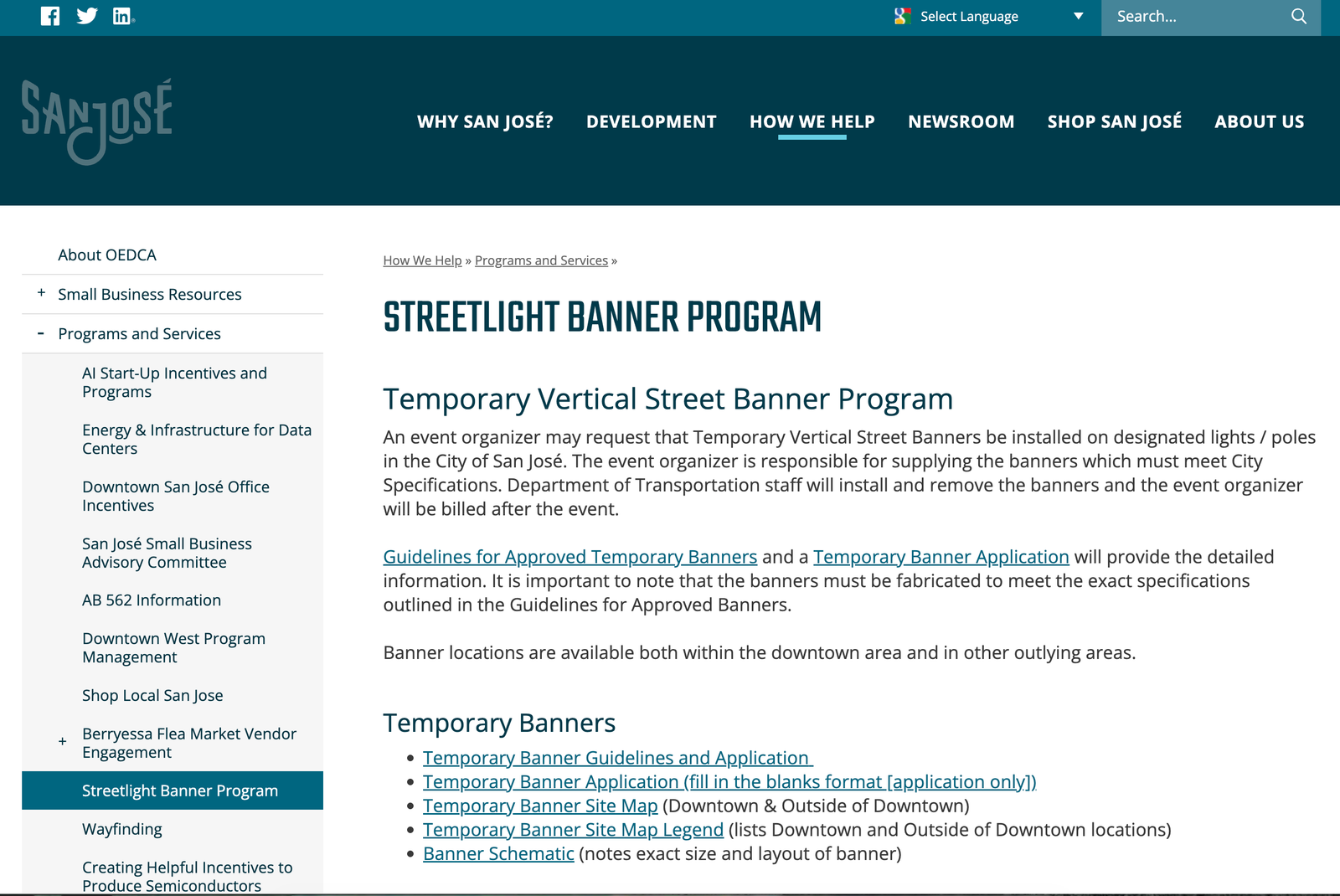
The city does not automatically assume ownership or maintenance responsibility for privately sponsored banners. Instead, organizations must work directly with the appropriate city departments, comply with design and content requirements, and cover all associated costs. The city’s role is administrative and regulatory, not proprietary.
Importantly, approval decisions are handled by city departments responsible for economic development and public infrastructure, not by individual councilmembers or by the City Council as a whole.
In other words, councilmembers do not personally determine the content, design, or future of banners throughout San Jose. Across the city, banners are regularly installed, updated, and replaced by different organizations without requiring City Council votes.
The Flag Issue
Perhaps the most striking aspect of the current controversy is that the original organizers themselves reportedly understood that city regulations prohibited the display of national flags or flag-like imagery on public banners.
According to Do Hung’s own account, the organizers attempted to work within those restrictions by incorporating three red stripes on a yellow background rather than displaying the full flag itself.
This suggests that they were fully aware of the city’s limitations from the very beginning.
Yet today, some of the same individuals are portraying the absence of those stripes on newer banners as evidence that the community has been erased or that its history has been betrayed.
Why the Issue Emerged Now
If preserving the banners was truly a matter of principle, critics ask why there was little public concern during the past decade as the original banners deteriorated.
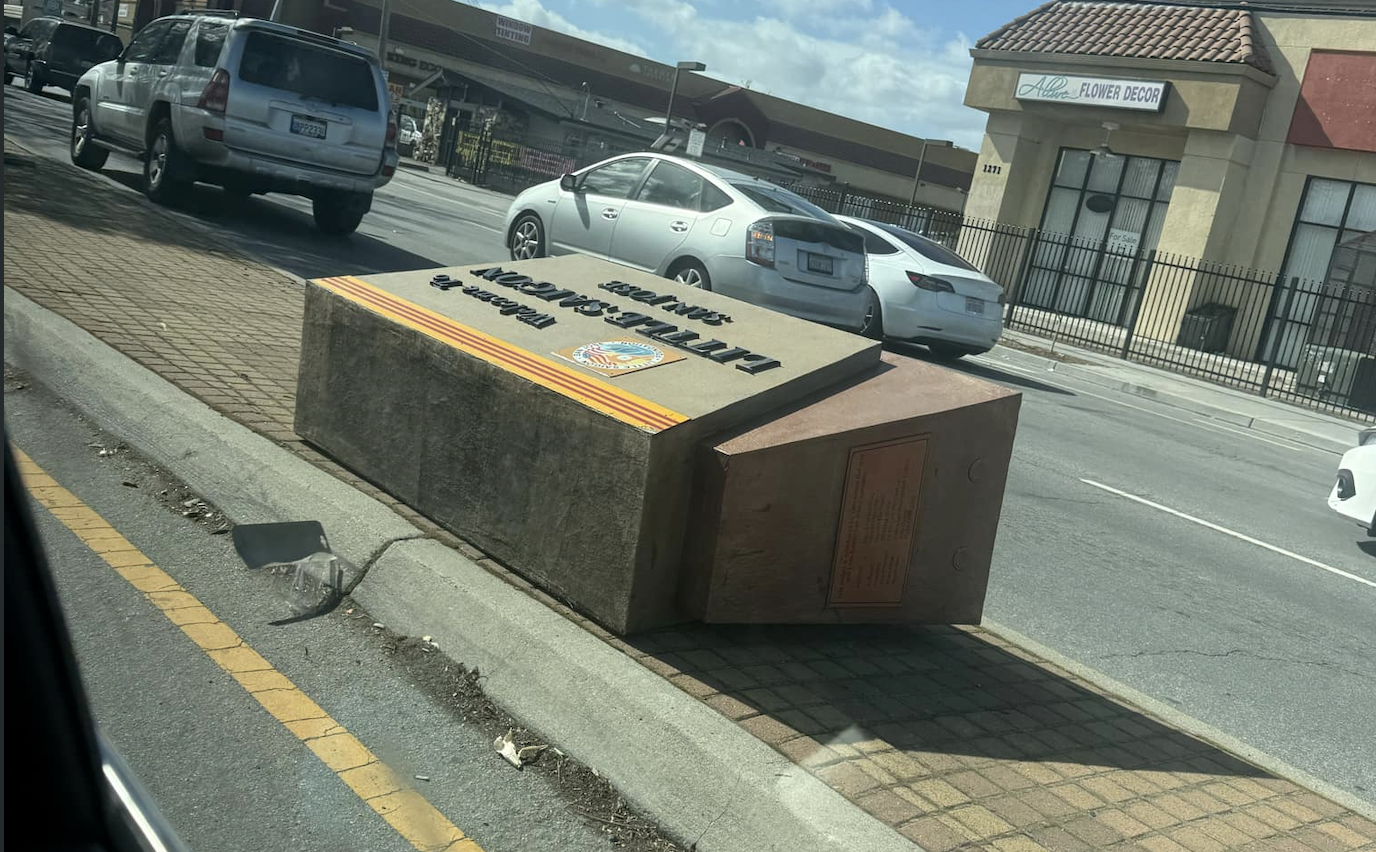
Why was there no organized effort to maintain them? Why was there little response when the “Welcome to Little Saigon” monument deteriorated and eventually collapsed? Why were newer banners sponsored by other organizations accepted without controversy? And why has the issue suddenly become a major political battle only during an election season?
A photograph of the collapsed monument even revealed that its internal structure consisted primarily of a wooden frame covered with cement, rather than the solid stone construction many community members had assumed for years.
A Larger Concern
The most concerning aspect of this controversy may not be the banners themselves.
Rather, it is the possibility that powerful emotions associated with the Vietnamese Freedom Flag are being used to divide the community, attack political opponents, and influence voters during an election cycle.
Critics argue that a routine administrative process has been transformed into a political crisis. They contend that emotion is being elevated above facts, accusations above evidence, and outrage above accountability. Meanwhile, longstanding questions about governance, finances, and the actual role of the Little Saigon Foundation remain unresolved.
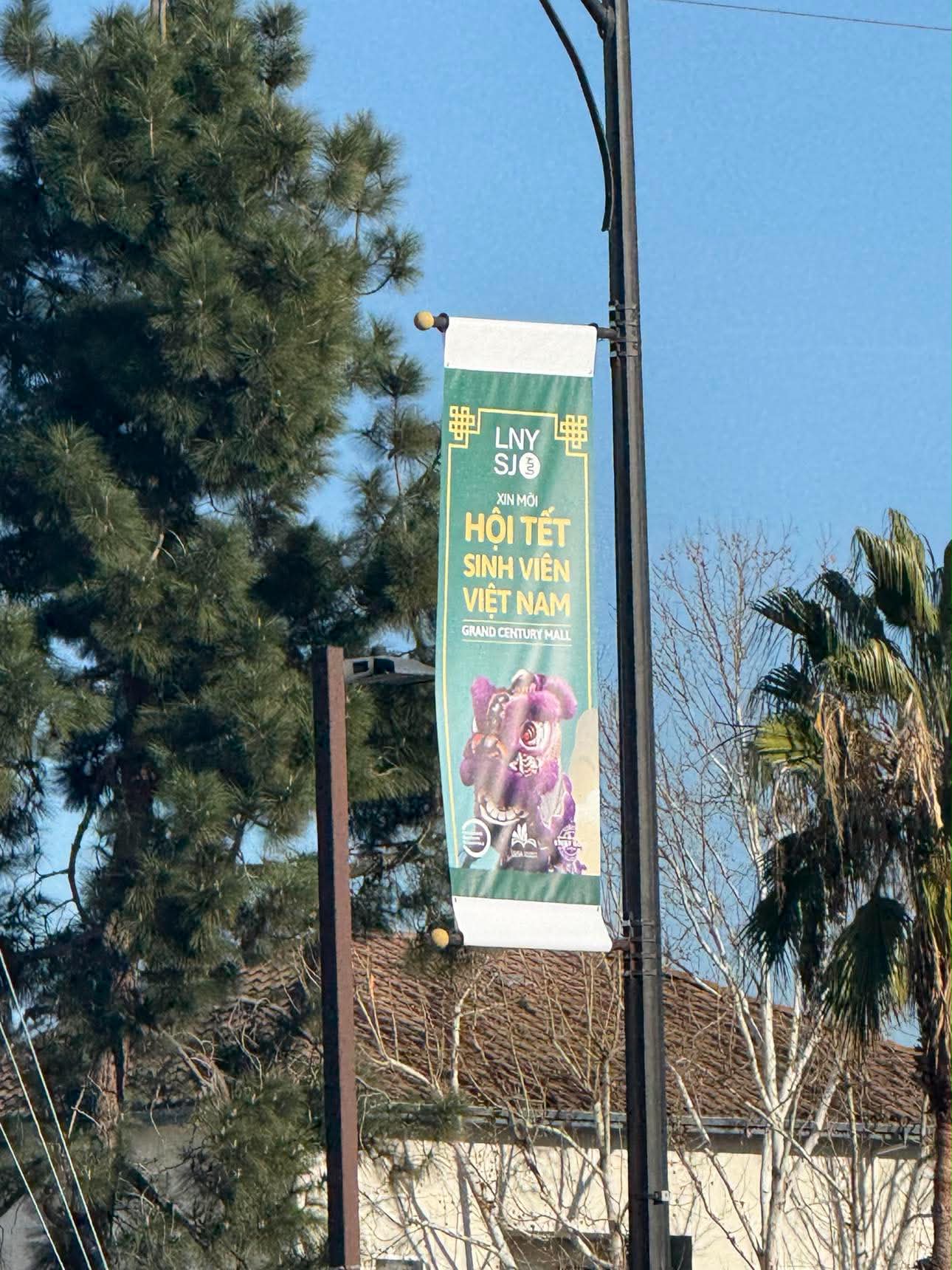
An example often cited is that banners sponsored by the Vietnamese American Roundtable in 2025 also did not contain flag imagery, consistent with current city guidelines. At that time, there was no public opposition from Little Saigon Foundation leaders, including Van Le, who previously served as the foundation’s vice president.
Conclusion
History cannot be rewritten through emotionally charged social media posts, and facts cannot be permanently obscured by politically motivated attacks.
If the goal is truly to preserve the legacy of Little Saigon San Jose, then what the community needs today is not election-season theater. It needs transparency, honesty, and genuine accountability regarding what was built, who managed it, and how it has been maintained under the banner of serving the Vietnamese community in San Jose.
Contact: Phuong Quynh
Email: qnlaw@att.net